
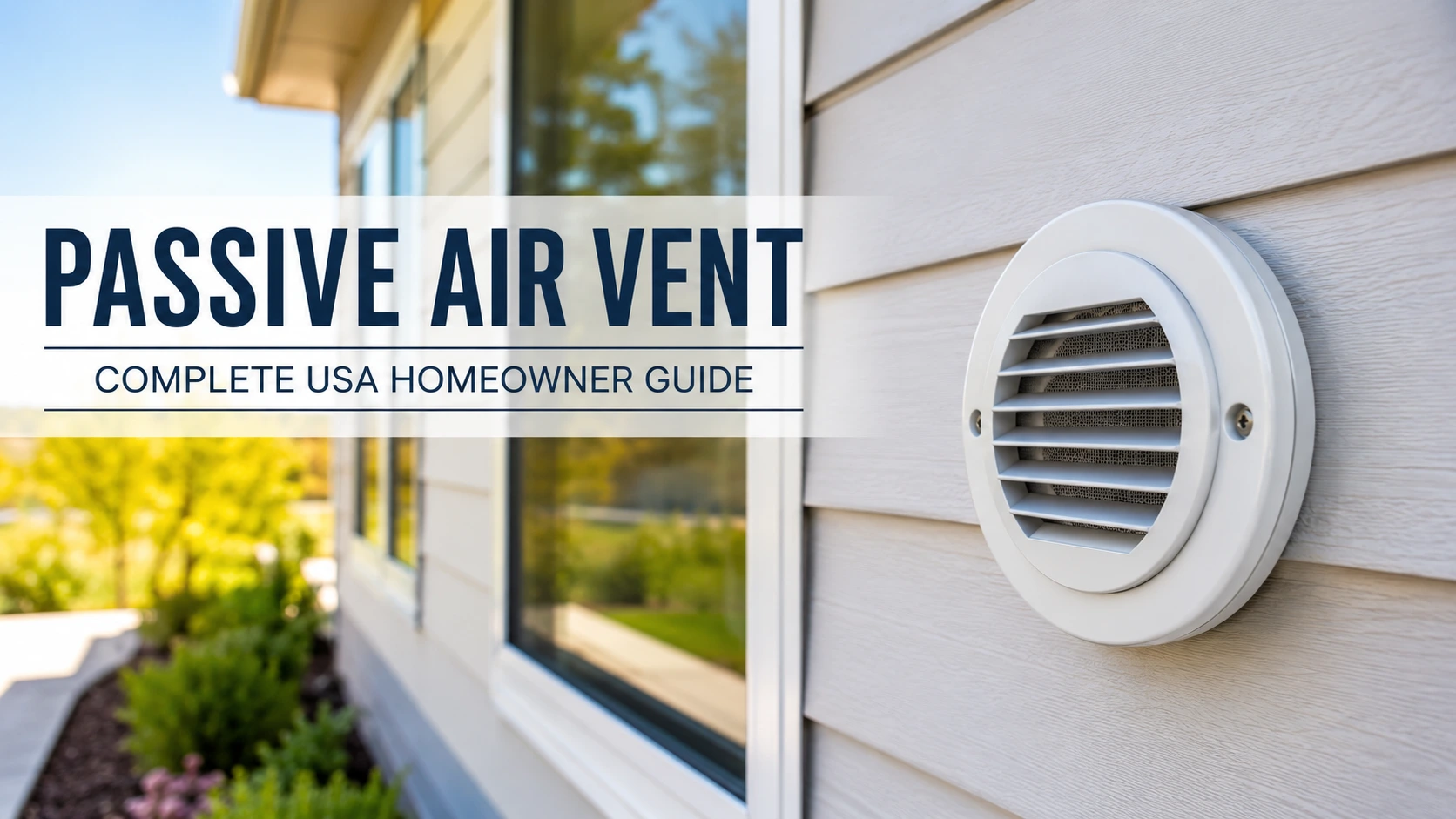
Passive Air Vent: Complete USA Homeowner Guide
A home should feel fresh every time you walk through the door. If the air feels stuffy, windows are covered with condensation, or certain rooms always seem humid, poor ventilation could be the real problem. That’s where a passive air vent can make a noticeable difference.
Unlike powered ventilation systems, a passive air vent works without electricity. It allows fresh outdoor air to enter and stale indoor air to leave by using natural airflow created by wind pressure and temperature differences. The result is better indoor air quality, improved air circulation, and less moisture buildup in many homes.
For homeowners across the United States, passive ventilation is often considered an affordable way to improve comfort while reducing condensation and helping control indoor humidity. However, it’s not the right solution for every property. Understanding how a passive air vent works, where it should be installed, and when a mechanical ventilation system may be the better option will help you make an informed decision.
This guide explains everything you need to know—from how passive air vents function to their benefits, limitations, installation tips, maintenance, costs, and how they compare with other home ventilation options.
What Is a Passive Air Vent?
A passive air vent is a non-powered ventilation opening that allows fresh outdoor air to enter or stale indoor air to leave a building through natural airflow. It does not use fans, motors, or electricity. Instead, airflow is created by natural forces such as wind pressure and the temperature difference between indoor and outdoor air.
Unlike mechanical ventilation systems, passive air vents operate continuously whenever natural conditions allow air to move. They are commonly installed through exterior walls, windows, roofs, or other parts of a home’s building envelope.
Their primary purpose is to improve indoor air quality by increasing air exchange. As fresh air enters the home, stale air, moisture, odors, and indoor pollutants are gradually pushed out through other openings or exhaust points.
Key Components of a Passive Air Vent
Although designs vary, most passive wall vents include several basic parts:
- Exterior weather-resistant grille
- Internal air duct or sleeve
- Interior vent cover
- Adjustable airflow control (on some models)
- Insect screen or mesh
- Optional dust or pollen filter
Some premium passive fresh air vents also include acoustic insulation to reduce outdoor noise while allowing airflow.
Common Applications
A passive air vent is commonly installed in:
- Bedrooms
- Living rooms
- Home offices
- Bathrooms
- Laundry rooms
- Basements
- Crawl spaces
- Garages
- Tiny homes
- Energy-efficient houses
Many newer homes use passive air vents alongside other ventilation systems to maintain healthier indoor air.
How Does a Passive Air Vent Work?
A passive air vent works by taking advantage of natural air movement. There are no switches to turn on and no electricity to power. Air moves because nature creates pressure differences.
In most homes, three natural forces influence airflow:
Wind Pressure
When wind hits one side of a building, it creates higher pressure outside that wall. Air naturally moves through a passive wall vent into the home, while stale indoor air exits through another opening with lower pressure.
This process creates continuous natural ventilation whenever wind conditions are favorable.
Stack Effect
Warm air naturally rises.
During colder months, warmer indoor air moves upward and escapes through higher openings in the house. As it leaves, cooler outdoor air enters through lower passive air vents to replace it.
This phenomenon is known as the stack effect and plays an important role in passive house ventilation.
Cross Ventilation
Cross ventilation occurs when fresh air enters one side of the home while stale air exits from another side.
For example:
- A passive fresh air vent on the north wall allows outdoor air inside.
- An open window or another vent on the opposite wall lets warm indoor air escape.
This creates continuous airflow throughout the living space.
Cross ventilation is especially effective during mild weather.
Natural Air Exchange
The overall goal of a passive air vent is to improve air exchange.
Without adequate ventilation, indoor air may contain:
- Moisture
- Cooking odors
- Cleaning chemicals
- Carbon dioxide
- Volatile organic compounds (VOCs)
- Dust
- Allergens
A properly installed passive air vent helps dilute these indoor pollutants by introducing fresh outdoor air.
Why Homes Need Proper Ventilation
Modern homes are designed to be more energy efficient than ever before. Better insulation, improved windows, and tighter construction reduce heating and cooling costs. However, these same improvements also limit natural airflow.
Without enough ventilation, indoor air can become trapped inside the home for long periods. Everyday activities such as cooking, showering, doing laundry, and even breathing release moisture and airborne particles that gradually build up indoors.
Over time, poor ventilation may lead to:
- Stale indoor air
- Excess humidity
- Window condensation
- Mold growth
- Musty odors
- Reduced indoor air quality
- Increased allergens
- Discomfort during different seasons
A passive air vent helps introduce fresh outdoor air without relying on electrical equipment. While it may not replace a complete whole-house ventilation system, it can improve airflow in many situations.
Homes that commonly benefit from additional ventilation include:
- Older houses with moisture problems
- Bedrooms that feel stuffy overnight
- Finished basements
- Home offices
- Laundry rooms
- Garages
- Tiny homes
- Cabins
- Renovated properties with improved insulation
Proper ventilation is also important for protecting the building itself. Excess moisture can damage paint, drywall, insulation, wood framing, and flooring over time.
By allowing continuous air movement, a passive air vent can contribute to a healthier indoor environment while helping reduce moisture-related issues.
Benefits of Installing a Passive Air Vent
Many homeowners choose a passive air vent because it offers a simple way to improve airflow without adding another powered appliance. While the results depend on the home’s design and local climate, passive ventilation provides several practical advantages.
Better Indoor Air Quality
One of the biggest benefits is fresher indoor air.
As outdoor air enters and stale indoor air leaves, the concentration of indoor pollutants gradually decreases. This can help reduce odors, airborne contaminants, and the feeling of stuffiness that often develops in tightly sealed homes.
Reduced Moisture Build-Up
Everyday activities release moisture into the air.
Cooking, showering, drying clothes, and even breathing add humidity to your home. Without proper ventilation, that moisture has nowhere to go.
A passive air vent encourages continuous air exchange, helping lower indoor humidity levels in many situations.
Lower Risk of Condensation
Condensation often appears on windows during colder months when warm indoor air meets cold glass surfaces.
Improving airflow with passive ventilation can help reduce this moisture buildup, especially in bedrooms and living spaces where humidity tends to collect.
Quiet Operation
Unlike powered ventilation systems, a passive air vent operates silently because there are no fans or moving mechanical parts.
This makes it an attractive option for:
- Bedrooms
- Nurseries
- Home offices
- Libraries
- Study rooms
No Electricity Required
A passive air vent works entirely through natural airflow.
That means:
- No electrical wiring
- No switches
- No energy consumption
- No operating costs related to electricity
For homeowners looking to improve ventilation while keeping utility costs low, this is a significant advantage.
Low Maintenance
Most passive wall vents require only occasional cleaning.
Routine maintenance generally involves:
- Removing dust from the grille
- Checking insect screens
- Cleaning filters (if installed)
- Ensuring airflow is not blocked
Compared with mechanical systems, maintenance is relatively simple.
Long Service Life
Because passive air vents contain very few moving components, they often last for many years when properly installed and maintained.
Many quality products are manufactured from:
- UV-resistant plastic
- Aluminum
- Stainless steel
- Powder-coated steel
These materials are designed to withstand changing weather conditions while maintaining reliable performance.
Potential Drawbacks You Should Know
A passive air vent can improve indoor air quality in many homes, but it is not a perfect solution. Like any ventilation method, it has limitations that homeowners should understand before installation. Knowing these drawbacks will help you decide whether passive ventilation meets your home’s needs or if a mechanical system would be more effective.
Airflow Depends on Weather
The biggest limitation of a passive air vent is that airflow is controlled by nature rather than a fan. Wind speed, wind direction, and the temperature difference between indoor and outdoor air all affect how much fresh air moves through the vent.
On windy days, airflow may be excellent. During calm weather, however, air movement can be much lower than expected. This makes passive ventilation less predictable than powered ventilation systems.
Limited Airflow Capacity
A passive air vent allows air to move naturally, but it cannot force air through a home the way an exhaust fan, Energy Recovery Ventilator (ERV), or Heat Recovery Ventilator (HRV) can.
If your home has high humidity from daily activities such as cooking, frequent showers, or indoor drying of clothes, passive ventilation alone may not provide enough air exchange.
Cold Drafts During Winter
Fresh outdoor air is beneficial, but during colder months it can sometimes create noticeable drafts near the vent.
Modern passive wall vents often include adjustable airflow controls and insulated designs to reduce this issue. Even so, homeowners in colder regions of the United States may notice cooler air entering during winter if the vent remains fully open.
Performance Changes Throughout the Year
Seasonal weather has a direct impact on how well a passive air vent performs.
For example:
| Season | Typical Performance |
|---|---|
| Spring | Good airflow due to changing temperatures |
| Summer | Moderate airflow depending on wind conditions |
| Fall | Generally effective in most climates |
| Winter | Strong airflow but possible cold drafts |
Homes in mild climates often experience more consistent performance than those exposed to extreme seasonal weather.
Outdoor Noise Can Enter
Since a passive air vent creates a direct path between indoor and outdoor spaces, some outside sounds may become more noticeable.
Depending on where your home is located, you might hear:
- Road traffic
- Lawn equipment
- Construction
- Neighbors
- Wind noise
Acoustic vent models are available if sound reduction is a priority.
Outdoor Air Quality Matters
Passive ventilation introduces outdoor air into your home. If outdoor air quality is poor because of pollen, wildfire smoke, industrial pollution, or heavy traffic, the incoming air may also carry those contaminants.
Some passive fresh air vents include filters to reduce dust and pollen, but they cannot completely remove every airborne pollutant.
Not a Complete Mold Solution
Many homeowners install a passive air vent hoping it will completely eliminate mold. While better airflow can reduce moisture in certain situations, mold usually develops because of multiple factors.
Common causes include:
- Water leaks
- Poor insulation
- High indoor humidity
- Plumbing problems
- Roof leaks
- Foundation moisture
A passive air vent can help reduce moisture buildup, but it should not be viewed as the only solution if mold is already present.
Incorrect Installation Reduces Performance
Even the highest-quality passive air vent will perform poorly if it is installed in the wrong location.
Common installation mistakes include:
- Installing too low or too high
- Blocking airflow with furniture
- Choosing the wrong vent size
- Poor sealing around the wall opening
- Installing only one vent where multiple air paths are needed
Proper placement is just as important as choosing the right product.
Where Should a Passive Air Vent Be Installed?
Choosing the correct location has a major impact on how well a passive air vent performs. A well-positioned vent allows fresh air to move naturally through the home, while poor placement can limit airflow and reduce its overall effectiveness.
Before installing a passive air vent, think about how air currently moves through your home. The goal is to create a natural path where fresh outdoor air enters one area and stale indoor air exits through another.
Bedrooms
Bedrooms are one of the most common places to install a passive air vent because they often remain closed overnight.
A vent can help:
- Reduce stuffy air
- Improve overnight air circulation
- Lower indoor humidity
- Make sleeping spaces feel fresher
Living Rooms
Living rooms usually have enough space for natural airflow to circulate effectively.
Installing a passive wall vent here may help improve overall air exchange while reducing odors that build up during daily activities.
Home Offices
People who work from home often spend several hours in one room with doors and windows closed.
A passive air vent can help maintain fresher indoor air without adding the noise of an electric fan.
Basements
Basements commonly experience higher humidity levels than the rest of the home.
A passive air vent may help reduce dampness when combined with good moisture management practices. However, if water regularly enters the basement, the source of the moisture should always be repaired first.
Laundry Rooms
Clothes washers and dryers release moisture into the surrounding air.
Adding a passive air vent can improve air circulation, although dryer exhaust systems must always follow local building codes and should never vent into the room.
Garages
Garages often trap odors from vehicles, fuel containers, paints, and chemicals.
A passive air vent may improve natural ventilation and reduce lingering smells, especially when paired with another opening that allows stale air to escape.
Bathrooms
Bathrooms produce large amounts of moisture.
While a passive air vent can improve airflow, most bathrooms in the United States still require a mechanical exhaust fan to remove humidity quickly after showers.
Crawl Spaces
Some crawl spaces benefit from passive ventilation, while others perform better when sealed and conditioned.
The best approach depends on your local climate, soil moisture, and building design. Always follow current building code requirements before adding crawl space vents.
General Placement Tips
For the best results:
- Install vents on exterior walls whenever possible.
- Keep vents clear of furniture, curtains, and cabinets.
- Create an airflow path through the home instead of relying on a single opening.
- Position intake and exit points on different sides of the house when practical.
- Choose the correct vent size based on the room’s dimensions and ventilation needs.
- Avoid placing vents where heavy rainwater can enter directly.
Proper placement allows a passive air vent to work with natural airflow instead of against it, improving indoor comfort and making ventilation more effective.
Types of Passive Air Vents
Not every passive air vent is designed for the same purpose. Some are made to improve airflow in living spaces, while others are built for basements, garages, attics, or crawl spaces. Choosing the right type depends on where the vent will be installed, your local climate, and the amount of ventilation your home requires.
Wall Vents
Wall vents are the most common type of passive air vent found in residential homes.
They are installed through an exterior wall and allow fresh outdoor air to enter naturally. Many modern wall vents include adjustable airflow controls so homeowners can increase or reduce airflow depending on the season.
Wall vents are suitable for:
- Bedrooms
- Living rooms
- Home offices
- Finished basements
- Laundry rooms
Window Vents
Window vents are built into window frames or installed as an additional component.
They provide continuous background ventilation without requiring homeowners to keep the entire window open. They are commonly used in newer energy-efficient homes where airtight construction limits natural airflow.
Trickle Vents
Trickle vents are small ventilation openings that provide a slow and continuous flow of fresh air.
Unlike larger passive wall vents, they deliver a lower volume of airflow throughout the day. They are popular because they help reduce condensation while maintaining indoor comfort.
Trickle vents work best in rooms that require constant background ventilation rather than large amounts of fresh air.
Air Bricks
Air bricks have been used in residential construction for many years.
These ventilated bricks contain openings that allow air to move through walls while preventing large debris from entering. Air bricks are commonly installed near the base of buildings to ventilate crawl spaces or suspended timber floors.
Roof Vents
Roof vents improve natural ventilation by allowing warm air to escape through the roof.
Because warm air naturally rises, roof vents work well alongside lower passive air vents to create continuous airflow through the home.
Roof ventilation is especially useful in attics where trapped heat can become excessive during summer.
Soffit Vents
Soffit vents are installed underneath roof overhangs.
Their main purpose is to allow cooler outdoor air to enter attic spaces while warmer air exits through ridge or roof vents. Together, they help maintain healthier attic temperatures and reduce moisture buildup.
Foundation Vents
Foundation vents are designed for crawl spaces and raised-floor homes.
Depending on climate conditions and local building practices, they may provide natural airflow beneath the house to reduce moisture accumulation.
Before installing foundation vents, homeowners should check local building requirements because some regions now recommend sealed crawl spaces instead of vented ones.
Adjustable Passive Air Vents
Some modern passive fresh air vents include adjustable airflow controls.
These controls allow homeowners to:
- Increase airflow during humid weather
- Reduce drafts during winter
- Close the vent temporarily during storms
- Improve indoor comfort throughout the year
This flexibility makes adjustable vents a popular option for many residential applications.
Acoustic Passive Air Vents
Homes located near busy roads, airports, schools, or commercial areas may benefit from acoustic vents.
These models are designed with sound-insulating materials that reduce outside noise while still allowing natural airflow into the home.
Although they typically cost more than standard vents, many homeowners find the improved comfort worthwhile.
Filtered Passive Air Vents
Filtered passive air vents include built-in filters that help reduce:
- Dust
- Pollen
- Insects
- Larger airborne particles
While filters improve incoming air quality, they require periodic cleaning or replacement to maintain proper airflow.
Comparison of Common Passive Air Vent Types
| Vent Type | Best For | Main Benefit |
|---|---|---|
| Wall Vent | Bedrooms, living rooms | General fresh air ventilation |
| Window Vent | Energy-efficient homes | Continuous background airflow |
| Trickle Vent | Bedrooms and offices | Reduces condensation |
| Air Brick | Crawl spaces, floors | Foundation ventilation |
| Roof Vent | Attics | Removes trapped hot air |
| Soffit Vent | Roof systems | Supports attic airflow |
| Foundation Vent | Raised homes | Ventilates crawl spaces |
| Acoustic Vent | Urban homes | Reduces outdoor noise |
| Filtered Vent | Allergy-sensitive homes | Cleaner incoming air |
Passive Air Vent vs Exhaust Fan
Many homeowners compare a passive air vent with an exhaust fan because both improve ventilation. However, they work in completely different ways.
A passive air vent relies on natural airflow, while an exhaust fan actively removes indoor air using electricity.
Choosing between them depends on the problem you are trying to solve.
| Feature | Passive Air Vent | Exhaust Fan |
|---|---|---|
| Electricity Required | No | Yes |
| Air Movement | Natural | Powered |
| Noise Level | Silent | Usually noticeable |
| Operating Cost | None | Ongoing electricity use |
| Installation | Simple | Moderate |
| Airflow Control | Depends on weather | Consistent |
| Maintenance | Low | Moderate |
| Best For | Fresh air circulation | Moisture removal |
When a Passive Air Vent Is the Better Choice
A passive air vent is often a good option if you want to:
- Improve everyday airflow
- Bring fresh outdoor air into living spaces
- Reduce stuffiness
- Lower humidity gradually
- Avoid electricity costs
- Minimize maintenance
It works well in bedrooms, living rooms, home offices, and other dry areas where continuous fresh air is beneficial.
When an Exhaust Fan Is the Better Choice
An exhaust fan is usually the better solution when moisture must be removed quickly.
Examples include:
- Bathrooms after showers
- Kitchens during cooking
- Laundry rooms with high humidity
- Utility rooms
- Workshops
Because powered fans actively remove moist air, they are much more effective for handling sudden spikes in humidity.
Can They Work Together?
Yes.
In many homes, the best ventilation strategy combines both systems.
For example:
- A passive air vent brings fresh outdoor air into the house.
- An exhaust fan removes stale or humid air from bathrooms or kitchens.
This creates a balanced airflow that improves indoor air quality while helping control moisture.
Instead of choosing one system over the other, many homeowners achieve the best results by using each where it performs best.
Passive Air Vent vs ERV
An Energy Recovery Ventilator (ERV) also improves indoor air quality, but it is a much more advanced system than a passive air vent.
Unlike passive ventilation, an ERV uses powered fans to exchange indoor and outdoor air while transferring heat and, in many models, a portion of the moisture between the two air streams.
| Feature | Passive Air Vent | ERV |
|---|---|---|
| Electricity Required | No | Yes |
| Controlled Airflow | No | Yes |
| Heat Recovery | No | Yes |
| Moisture Transfer | No | Yes |
| Installation Cost | Low | High |
| Energy Efficiency | Moderate | Excellent |
| Whole-House Ventilation | Limited | Yes |
| Maintenance | Low | Moderate |
Choose a Passive Air Vent If:
- You need an affordable ventilation option.
- You want a simple installation.
- Your home only needs basic fresh air circulation.
- You prefer low maintenance.
- Electricity-free operation is important.
Choose an ERV If:
- Your home is tightly sealed.
- You want year-round controlled ventilation.
- Indoor air quality is a major concern.
- Energy efficiency is a priority.
- You are building or renovating a modern home.
While ERVs provide more consistent airflow, they also require a larger investment and professional installation. A passive air vent remains a practical choice for homeowners who want a simpler ventilation solution without the added complexity of mechanical equipment.
Passive Air Vent vs HRV
A Heat Recovery Ventilator (HRV) is another mechanical ventilation system that is often compared with a passive air vent. Both are designed to improve indoor air quality, but they achieve this in very different ways.
A passive air vent depends on natural airflow, while an HRV uses powered fans to bring fresh outdoor air into the home and remove stale indoor air at the same time. During this process, the HRV transfers heat from the outgoing air to the incoming air, helping reduce energy loss during colder months.
| Feature | Passive Air Vent | HRV |
|---|---|---|
| Electricity Required | No | Yes |
| Airflow | Weather dependent | Controlled year-round |
| Heat Recovery | No | Yes |
| Whole-House Ventilation | Limited | Yes |
| Energy Savings | Basic | High |
| Installation Cost | Low | High |
| Maintenance | Low | Moderate |
| Best For | Individual rooms | Entire home |
When a Passive Air Vent Makes Sense
A passive air vent is often the better option when:
- You want a cost-effective solution.
- Your home needs better everyday airflow.
- Installation should be simple.
- You prefer very little maintenance.
- Whole-house mechanical ventilation is unnecessary.
When an HRV Is Worth Considering
An HRV is usually recommended when:
- The home is highly insulated and airtight.
- Indoor air quality needs continuous control.
- Winters are long and cold.
- You want balanced ventilation throughout the entire house.
- Energy efficiency is an important long-term goal.
Although an HRV offers greater control, it also requires professional installation, electrical power, and routine maintenance. For many homeowners, a passive air vent remains a practical solution for improving airflow without the higher cost of a complete ventilation system.
Passive Air Vent vs Trickle Vent
The terms “passive air vent” and “trickle vent” are sometimes used interchangeably, but they are not exactly the same.
A trickle vent is actually one type of passive air vent. It is designed to provide a small, continuous amount of fresh air, usually through a window frame or a small opening in the building.
A passive wall vent is generally larger and can deliver a greater volume of natural airflow.
| Feature | Passive Air Vent | Trickle Vent |
|---|---|---|
| Airflow Capacity | Medium to High | Low to Medium |
| Typical Location | Exterior walls | Window frames |
| Installation | Wall opening | Built into windows |
| Airflow Adjustment | Often adjustable | Usually adjustable |
| Best For | General room ventilation | Background ventilation |
Passive Air Vent
A passive wall vent is suitable when you want to improve airflow throughout a room and allow a larger volume of fresh air to enter naturally.
It is commonly installed in:
- Bedrooms
- Living rooms
- Home offices
- Basements
- Garages
Trickle Vent
A trickle vent is ideal when only a small amount of continuous ventilation is needed.
It is commonly used to:
- Reduce condensation on windows.
- Improve background ventilation.
- Maintain airflow in energy-efficient homes.
- Supplement other ventilation systems.
In many homes, both types can work together to improve indoor air quality.
Best Places to Use Passive Air Vents
A passive air vent performs best when it is installed in areas that naturally benefit from continuous fresh air. While every home is different, certain rooms consistently gain the most from improved ventilation.
Bedrooms
Bedrooms often become stuffy overnight because doors and windows remain closed for several hours.
Adding a passive air vent may help:
- Improve overnight airflow.
- Reduce morning stuffiness.
- Lower humidity.
- Create a more comfortable sleeping environment.
Living Rooms
Living rooms are frequently occupied throughout the day.
Fresh outdoor air helps remove odors from cooking, pets, and everyday household activities while making the space feel more comfortable.
Home Offices
Working from home often means spending many hours in a single room.
Better ventilation may help maintain fresher indoor air throughout the workday without introducing the noise of powered fans.
Basements
Basements often experience higher humidity than the rest of the house.
A passive air vent can improve air circulation, but moisture problems caused by leaks or groundwater should always be addressed before relying on additional ventilation.
Laundry Rooms
Laundry rooms generate moisture every time clothes are washed or dried.
Additional airflow helps reduce humidity and supports faster drying of the room itself after heavy laundry use.
Garages
Garages often contain:
- Vehicle exhaust residue
- Fuel odors
- Paint fumes
- Cleaning chemicals
Passive ventilation helps improve natural airflow, making the space feel fresher between uses.
Tiny Homes
Tiny homes have limited interior space, which means moisture and odors can build up more quickly.
A passive air vent provides continuous airflow without increasing electricity consumption, making it a popular option for compact living spaces.
Cabins and Vacation Homes
Properties that remain unoccupied for extended periods may develop stale air or excess moisture.
Passive ventilation helps maintain background airflow even when the building is empty, reducing the likelihood of musty odors.
Rooms That May Need Mechanical Ventilation Instead
While passive air vents work well in many living spaces, certain rooms usually require powered ventilation.
These include:
- Bathrooms with showers
- Kitchens used for frequent cooking
- Commercial workspaces
- Indoor workshops
- Rooms producing significant humidity
In these areas, a mechanical exhaust fan is often the better choice because it removes moist air much more quickly.
Can Passive Air Vents Reduce Condensation?
Yes, a passive air vent can help reduce condensation, but only when it is part of an overall ventilation strategy.
Condensation forms when warm, moisture-filled indoor air touches a cold surface such as a window or an exterior wall. As the air cools, water vapor changes into liquid droplets.
By improving natural airflow, a passive air vent allows some of that moisture to leave the home while bringing in drier outdoor air under suitable weather conditions.
How Passive Ventilation Helps
Continuous air movement can:
- Lower indoor humidity.
- Replace stale air with fresh outdoor air.
- Reduce moisture buildup.
- Improve overall air circulation.
Over time, this may reduce the amount of condensation that appears on windows and other cold surfaces.
When It Works Best
A passive air vent is most effective when:
- Indoor humidity is only moderately elevated.
- The home has a clear airflow path.
- Multiple vents allow air to circulate naturally.
- Outdoor air is less humid than indoor air.
When It May Not Be Enough
If condensation is caused by larger moisture problems, a passive air vent alone may not solve the issue.
Examples include:
- Plumbing leaks
- Roof leaks
- Poor insulation
- Wet basements
- Inadequate bathroom ventilation
- Excess indoor humidity from daily activities
In these situations, improving ventilation should be combined with repairing the underlying source of moisture.
While a passive air vent can contribute to lower humidity, homeowners should view it as one part of a complete moisture-control plan rather than a standalone fix.
Can They Help Prevent Mold?
A passive air vent can help reduce the conditions that allow mold to grow, but it cannot prevent mold on its own. Mold needs three things to thrive: moisture, a suitable surface, and time. Ventilation addresses only one of those factors.
When fresh outdoor air replaces humid indoor air, moisture levels often decrease. Lower humidity makes it harder for mold to develop on walls, ceilings, window frames, and other surfaces.
How Better Ventilation Helps
A properly installed passive air vent can support mold prevention by:
- Reducing indoor humidity.
- Improving air circulation.
- Helping moisture escape naturally.
- Reducing condensation on windows.
- Keeping rooms from feeling damp.
These improvements are especially useful in homes where poor airflow is contributing to excess moisture.
Situations Where Mold May Still Develop
Ventilation cannot solve every moisture problem. Mold may continue to appear if your home has:
- Roof leaks
- Plumbing leaks
- Foundation moisture
- Flood damage
- Poor insulation
- Water entering through windows
- High humidity from everyday activities
If moisture is entering the building, repairing the source should always come before installing additional ventilation.
Signs That Moisture Is the Bigger Problem
Watch for these warning signs:
- Mold keeps returning after cleaning.
- Paint is peeling.
- Walls feel damp.
- Musty odors remain all year.
- Water stains appear on ceilings or walls.
- Condensation forms every morning.
These symptoms usually indicate a moisture issue that requires more than improved airflow.
Best Practices for Mold Prevention
For the best results, combine a passive air vent with other moisture-control measures:
- Repair leaks quickly.
- Keep indoor humidity between 30% and 50%.
- Use bathroom exhaust fans after showering.
- Vent clothes dryers outdoors.
- Improve attic insulation.
- Clean gutters and downspouts regularly.
- Maintain proper drainage around the home’s foundation.
A passive air vent works best as one part of a complete indoor air quality strategy rather than the only defense against mold.
Choosing the Right Passive Air Vent
Not all passive air vents perform the same. The best choice depends on your home’s layout, climate, ventilation goals, and budget.
Buying the cheapest option isn’t always the best decision. A well-built vent can provide better airflow, last longer, and require less maintenance over time.
Consider the Room Size
Larger rooms usually require greater airflow than smaller spaces.
For example:
- Small bedrooms may only need one properly sized vent.
- Large living rooms may require multiple vents or a larger airflow capacity.
- Basements often benefit from more than one ventilation point.
Choosing the correct size helps improve natural air circulation without over-ventilating the room.
Look for Adjustable Airflow
An adjustable passive air vent allows you to control how much fresh air enters your home.
This feature is useful because you can:
- Reduce drafts during winter.
- Increase airflow in humid weather.
- Close the vent temporarily during storms.
- Improve comfort throughout the year.
Many homeowners appreciate having this flexibility instead of a permanently open vent.
Choose Durable Materials
Outdoor vents are exposed to rain, sunlight, temperature changes, and wind.
Look for materials such as:
- Powder-coated aluminum
- Stainless steel
- UV-resistant plastic
- Corrosion-resistant metal
Quality materials help extend the life of the vent while reducing maintenance.
Check for Insect Screens
A built-in insect screen is an important feature.
It helps prevent:
- Mosquitoes
- Flies
- Wasps
- Spiders
- Larger insects
- Leaves and debris
The screen should be easy to remove for occasional cleaning.
Consider Filter Options
Some passive fresh air vents include replaceable filters that reduce:
- Dust
- Pollen
- Larger airborne particles
Filtered models may be especially useful for households with allergy sufferers or homes located near busy roads.
Remember that filters require periodic cleaning or replacement to maintain proper airflow.
Think About Noise Levels
If the vent will be installed near a busy street or airport, consider an acoustic model.
These vents are designed to reduce outside noise while still allowing natural ventilation.
Although they cost more than standard models, they can significantly improve comfort in noisy environments.
Weather Resistance
A quality passive air vent should be designed to withstand outdoor conditions.
Look for features such as:
- Rain protection
- UV resistance
- Corrosion resistance
- Wind protection
- Durable seals
Weather-resistant construction helps prevent premature wear and reduces the chance of water entering the wall.
Warranty and Product Support
A longer warranty often reflects greater confidence in product quality.
Before purchasing, check:
- Warranty length
- Replacement part availability
- Installation instructions
- Customer support
- Product certifications
These details become valuable if repairs or replacements are needed in the future.
Passive Air Vent Buying Checklist
Before making a purchase, ask yourself:
- Is the vent the correct size for the room?
- Does it have adjustable airflow?
- Is an insect screen included?
- Does it use durable materials?
- Is it suitable for my local climate?
- Will it reduce outside noise if necessary?
- Is maintenance simple?
- Does it include a warranty?
- Can replacement parts be purchased easily?
Taking a few extra minutes to compare products can help you choose a passive air vent that performs reliably for many years.
Installation Tips
Proper installation has a direct impact on how well a passive air vent works. Even a high-quality product may provide poor airflow if it is installed in the wrong location or fitted incorrectly.
If you are comfortable with basic home improvement projects, some passive wall vents can be installed as a DIY project. However, larger installations or work involving structural walls should be completed by an experienced contractor.
Choose the Right Location
The location of the vent affects how air moves through the home.
Good locations usually:
- Face open outdoor space.
- Allow unobstructed airflow.
- Connect naturally with other ventilation openings.
- Stay clear of large furniture.
Avoid installing vents where airflow will immediately be blocked by cabinets, shelving, or heavy curtains.
Create a Natural Airflow Path
A passive air vent performs best when fresh air can enter one area while stale air leaves through another.
Instead of thinking about a single vent, think about the entire airflow path through your home.
For example:
- Fresh air enters through a wall vent in the living room.
- Air moves naturally through hallways.
- Moist indoor air exits through bathroom or kitchen exhaust systems.
This approach improves overall ventilation rather than simply adding one opening in the wall.
Follow Manufacturer Instructions
Every passive air vent is slightly different.
Always follow the manufacturer’s recommendations regarding:
- Hole diameter
- Mounting hardware
- Sealant
- Drainage
- Airflow direction
- Weather protection
Correct installation helps maximize performance and reduce future maintenance.
Seal Around the Opening
After installation, seal the gap between the vent sleeve and the wall.
Proper sealing helps:
- Prevent water intrusion.
- Reduce unwanted air leakage.
- Improve energy efficiency.
- Protect the wall structure.
Use sealants recommended for exterior applications and suitable for your wall material.
Keep the Vent Accessible
Do not permanently block the vent after installation.
Leave enough space to:
- Clean the grille.
- Replace filters if fitted.
- Inspect for insects or debris.
- Perform routine maintenance.
Easy access will save time and help maintain consistent airflow over the life of the vent.
Common Installation Mistakes
Installing a passive air vent may seem straightforward, but small mistakes can reduce its effectiveness. Many ventilation problems are caused by poor placement or incorrect installation rather than the vent itself.
Understanding these common mistakes can help you avoid unnecessary repairs and improve long-term performance.
Installing Only One Vent
One of the most common mistakes is installing a single passive air vent and expecting it to ventilate the entire house.
Fresh air needs a path to move through the home. If air can enter but has nowhere to leave, circulation becomes limited.
In many homes, better results are achieved by combining intake vents with existing exhaust points such as bathroom fans, kitchen exhaust systems, or additional ventilation openings.
Choosing the Wrong Size
A vent that is too small may not provide enough airflow.
A vent that is too large can increase drafts or allow more outdoor noise to enter.
Always select a passive air vent that matches the room size and intended airflow requirements instead of simply choosing the largest available model.
Blocking the Airflow
Even a properly installed vent cannot work effectively if airflow is obstructed.
Avoid placing these items directly in front of the vent:
- Large furniture
- Curtains
- Cabinets
- Storage boxes
- Decorative wall panels
Keeping the area clear allows air to circulate naturally throughout the room.
Poor Wall Sealing
Leaving gaps around the vent opening can create several problems.
Poor sealing may allow:
- Water penetration
- Unwanted air leakage
- Insects
- Reduced energy efficiency
Using appropriate exterior-grade sealants helps protect both the wall and the ventilation system.
Ignoring Local Climate
Climate should influence the type of passive air vent you choose.
For example:
- Cold regions may benefit from insulated or adjustable vents.
- Coastal areas require corrosion-resistant materials.
- Areas with frequent pollen may benefit from filtered vents.
- Noisy urban environments often benefit from acoustic models.
Selecting a vent without considering local conditions can reduce comfort throughout the year.
Skipping Routine Maintenance
Although passive air vents require little maintenance, they are not maintenance-free.
Dust, insects, leaves, and outdoor debris can gradually reduce airflow.
A quick inspection every few months helps keep the vent operating efficiently.
Installing in the Wrong Room
Some rooms benefit more from passive ventilation than others.
For example:
Suitable rooms include:
- Bedrooms
- Living rooms
- Home offices
- Hallways
Less suitable rooms include:
- Bathrooms with heavy daily moisture
- Commercial kitchens
- Workshops producing fumes
These areas often require powered ventilation instead of relying solely on natural airflow.
Forgetting About Future Access
Some homeowners cover the interior grille with permanent shelving or built-in furniture after installation.
This makes future cleaning and maintenance difficult.
Always leave enough space around the vent so it can be inspected and cleaned without removing walls or furniture.
Maintenance and Cleaning
One of the biggest advantages of a passive air vent is its low maintenance requirements. Unlike mechanical ventilation systems, there are no motors, belts, or electrical components that need regular servicing.
Even so, occasional maintenance helps keep airflow consistent and extends the life of the vent.
Inspect the Vent Regularly
A visual inspection every few months is usually enough for most homes.
Look for:
- Dust buildup
- Leaves
- Spider webs
- Insects
- Damaged grilles
- Loose fasteners
Removing small obstructions early helps prevent airflow problems later.
Clean the Interior and Exterior Grilles
Dust naturally collects on vent openings over time.
Cleaning the grilles is simple:
- Remove loose dust with a soft brush or vacuum.
- Wipe the surface with a damp cloth.
- Allow the vent to dry completely before reassembling any removable parts.
Avoid using harsh chemicals that could damage plastic or painted finishes.
Check Insect Screens
If your passive air vent includes an insect screen, inspect it regularly for:
- Tears
- Clogs
- Loose edges
- Debris
A damaged screen should be replaced promptly to prevent insects from entering the home.
Replace or Clean Filters
Filtered passive fresh air vents require additional maintenance.
Depending on the manufacturer’s recommendations, filters should be:
- Vacuumed
- Washed if reusable
- Replaced when worn
A clogged filter reduces airflow and decreases ventilation efficiency.
Inspect Exterior Components
Outdoor weather can gradually affect exposed vent covers.
Check for:
- Cracks
- Rust
- UV damage
- Loose mounting screws
- Water damage
Replacing damaged exterior components early helps prevent larger repairs later.
Winter Maintenance
Cold weather may require a little extra attention.
Before winter:
- Confirm adjustable vents operate smoothly.
- Remove leaves and debris.
- Inspect seals around the wall opening.
- Check that rain protection remains secure.
If snow accumulates against exterior walls, ensure the vent opening remains clear.
Maintenance Checklist
Follow this simple routine throughout the year:
| Maintenance Task | Recommended Frequency |
|---|---|
| Inspect vent | Every 3 months |
| Clean interior grille | Every 3–6 months |
| Clean exterior grille | Every 3–6 months |
| Check insect screen | Every 6 months |
| Replace filter (if fitted) | As recommended by manufacturer |
| Inspect seals | Once per year |
| Check for exterior damage | Once per year |
Spending just a few minutes on routine maintenance helps keep a passive air vent operating efficiently for many years.
Costs of Passive Air Vents in the USA
The total cost of installing a passive air vent depends on the product you choose, the wall construction, labor costs, and whether you complete the installation yourself or hire a professional.
Compared with many mechanical ventilation systems, passive air vents are generally one of the most affordable ways to improve indoor airflow.
Product Costs
Basic passive wall vents are usually the least expensive option.
Higher-end products may include features such as:
- Adjustable airflow
- Acoustic insulation
- Replaceable filters
- Premium weather protection
- Decorative interior covers
These additional features increase the purchase price but may improve comfort and long-term performance.
Installation Costs
Installation costs vary depending on factors such as:
- Wall material
- Brick or siding construction
- Accessibility
- Number of vents
- Local labor rates
A straightforward installation is usually less expensive than projects involving concrete walls or complex renovations.
Maintenance Costs
Ongoing maintenance expenses are generally low.
Most homeowners only need to budget for:
- Occasional cleaning supplies
- Replacement filters if applicable
- Minor replacement parts over time
Because a passive air vent uses no electricity, there are no operating energy costs associated with daily use.
Long-Term Value
Many homeowners choose passive ventilation because it offers good long-term value.
Benefits may include:
- Improved indoor comfort.
- Better air circulation.
- Lower humidity in suitable conditions.
- Reduced reliance on powered ventilation.
- Minimal maintenance.
- No electricity consumption.
While it will not replace a complete whole-house ventilation system, a passive air vent can be an economical upgrade for homes needing better natural airflow.
When a Passive Air Vent Is the Right Choice
A passive air vent is an excellent option in many situations, particularly when the goal is to improve everyday air circulation without installing complex mechanical equipment.
It is often the right choice if your home experiences:
- Stuffy bedrooms.
- Mild condensation.
- Limited natural airflow.
- Occasional humidity.
- Poor background ventilation.
It is also well suited for homeowners who want:
- Low installation costs.
- Silent operation.
- No electricity use.
- Simple maintenance.
- Long service life.
Homes with moderate ventilation needs often benefit from passive airflow combined with existing exhaust fans in bathrooms and kitchens.
When You Need a Mechanical Ventilation System Instead
Although a passive air vent can improve airflow, some homes require a more powerful solution.
Mechanical ventilation may be the better choice if:
- The home is extremely airtight.
- Indoor humidity remains high year-round.
- Mold continues returning after moisture problems are repaired.
- Indoor air quality is consistently poor.
- The home lacks adequate airflow despite multiple passive vents.
- Whole-house ventilation is required.
Systems such as an ERV or HRV provide controlled, balanced ventilation regardless of outdoor weather conditions.
If you’re unsure which solution is appropriate, consider having an indoor air quality assessment performed by a qualified HVAC or ventilation professional. This can help identify whether a passive air vent will meet your needs or if a more comprehensive ventilation system would provide better long-term results.
Frequently Asked Questions
Do passive air vents really work?
Yes. A passive air vent works by allowing fresh outdoor air to enter and stale indoor air to leave through natural airflow. Its performance depends on wind conditions, temperature differences, and correct installation. While it can improve indoor air quality, it does not move air as consistently as a powered ventilation system.
Can a passive air vent replace an exhaust fan?
Usually, no. A passive air vent is designed to provide continuous background ventilation, while an exhaust fan quickly removes moisture, odors, and steam from specific areas such as bathrooms and kitchens. In many homes, both systems work well together.
Will a passive air vent reduce condensation?
It can help reduce condensation by improving airflow and lowering indoor humidity. However, if condensation is caused by water leaks, poor insulation, or excessive moisture inside the home, additional repairs will be needed.
Can passive air vents help prevent mold?
A passive air vent can lower the risk of mold by reducing humidity and improving air circulation. It cannot stop mold caused by plumbing leaks, roof leaks, flooding, or other moisture problems. Mold prevention requires controlling both moisture and ventilation.
Do passive air vents increase heating or cooling costs?
Some heat or cooled air can escape through a passive air vent because outdoor air is continuously exchanged with indoor air. Modern adjustable vents help reduce unnecessary airflow during extreme weather, and proper installation minimizes energy loss.
How many passive air vents does a house need?
There is no single answer because every home is different. The number of vents depends on the home’s size, layout, room usage, and existing ventilation. Larger homes usually require multiple ventilation points to create effective natural airflow.
Are passive air vents suitable for new homes?
Yes. Many modern homes include passive ventilation as part of their overall indoor air quality strategy. However, highly airtight homes often benefit from balanced mechanical ventilation systems such as ERVs or HRVs for more consistent airflow.
Do passive air vents let insects inside?
Most quality passive air vents include built-in insect screens that prevent mosquitoes, flies, and larger insects from entering. Regular inspection helps ensure the screen remains in good condition.
Can I install a passive air vent myself?
Some wall vents can be installed as a DIY project if you have the necessary tools and experience. However, cutting through exterior walls requires careful planning. Hiring a professional is recommended for complex installations or structural walls.
How often should a passive air vent be cleaned?
Most homeowners only need to inspect and clean the vent every three to six months. Homes located in dusty areas or near trees may require more frequent cleaning to keep airflow unrestricted.
Final Thoughts
A passive air vent is one of the simplest ways to improve natural ventilation in a home. It works without electricity, operates silently, and requires very little maintenance, making it an attractive option for homeowners who want fresher indoor air without the ongoing costs of a powered ventilation system.
When installed correctly, a passive air vent can help improve air circulation, reduce stale indoor air, lower humidity in suitable conditions, and decrease the likelihood of condensation. It is especially useful in bedrooms, living rooms, home offices, basements, garages, and other areas where continuous background ventilation is beneficial.
At the same time, it’s important to understand its limitations. Because airflow depends on natural forces such as wind and temperature differences, performance is not always consistent. Homes with persistent moisture issues, severe condensation, or extremely airtight construction may require additional ventilation solutions, including mechanical systems like an ERV or HRV.
The best results come from viewing a passive air vent as part of a complete ventilation strategy rather than a standalone fix. Choosing the right vent, installing it in the proper location, maintaining it regularly, and addressing any underlying moisture problems will provide the greatest long-term benefits.
If your goal is to create a healthier, more comfortable indoor environment with better air circulation and minimal operating costs, a well-selected passive air vent can be a practical and worthwhile investment for many homes across the United States.