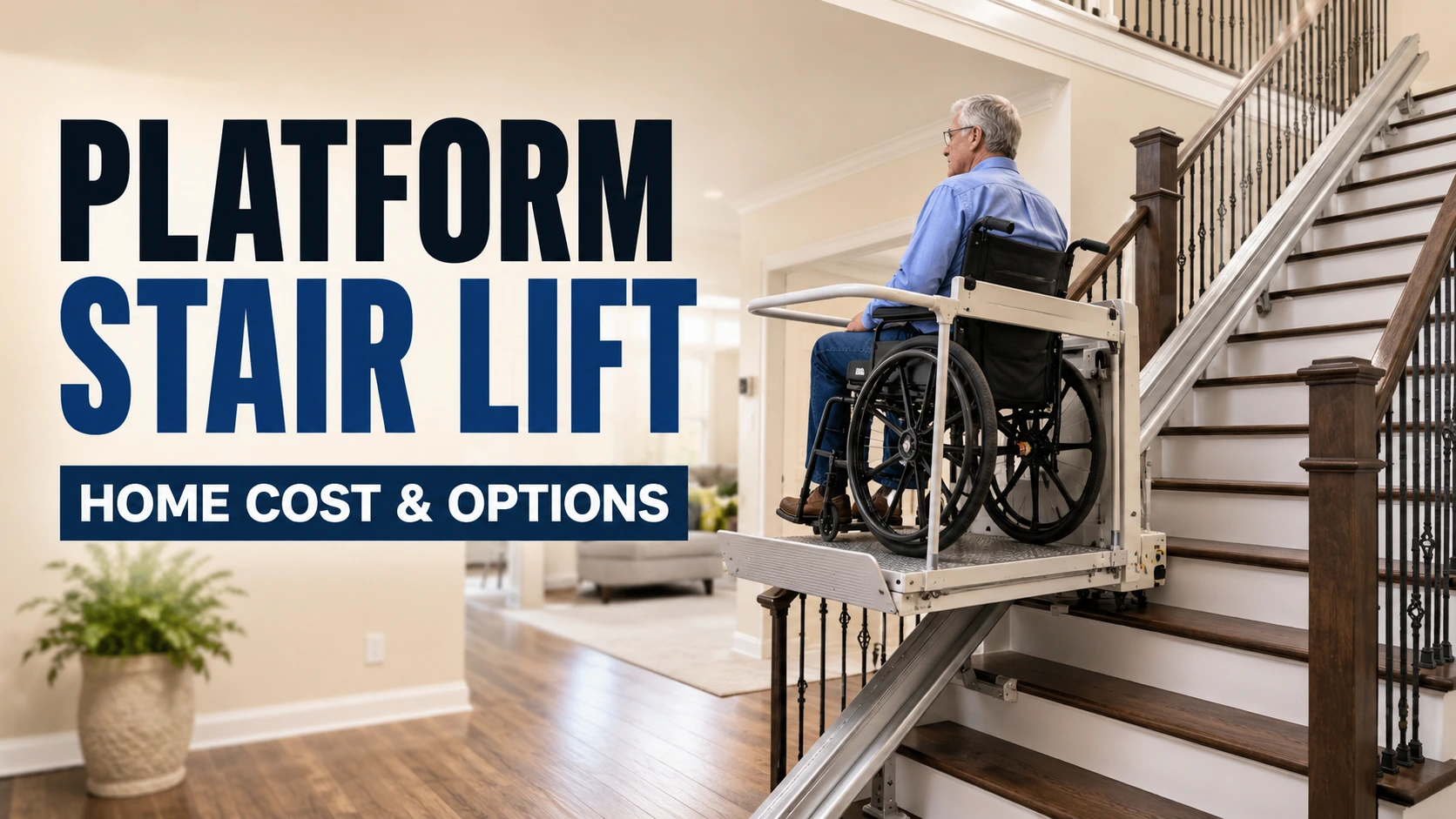
Platform Stair Lift for Home: Cost, Types & How to Choose
If stairs have become difficult or unsafe to use with a wheelchair, a platform stair lift for home can make moving between levels much easier. Instead of transferring from a wheelchair to a stairlift seat, a wheelchair user can ride on a platform that travels along the staircase. This type of wheelchair platform lift, also called an inclined platform lift, is designed with home accessibility in mind. But the right setup depends on the stairs and the space around them. Before choosing a residential platform lift, it helps to compare the platform stair lift cost, understand how wheelchair lifts for stairs work, and check whether your home needs a straight or curved system. Safety features, staircase measurements, and installation requirements matter, too.
TL;DR: Platform Stair Lift for Home at a Glance
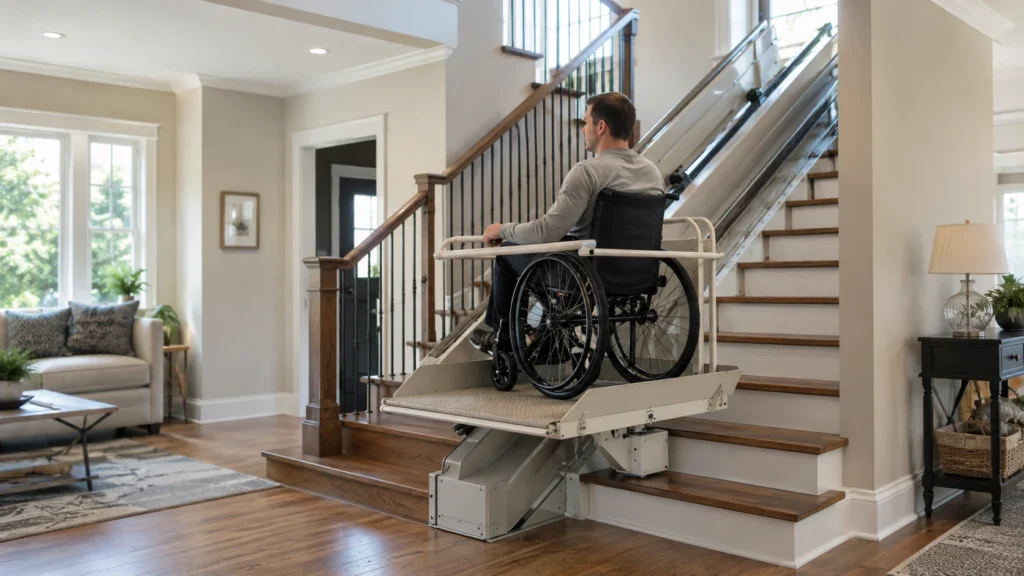
A platform stair lift for home is an inclined lift that carries a wheelchair along a staircase, so the user can often stay in their wheelchair during the ride. It suits wheelchair users who need access between floors. Unlike a regular stairlift, it uses a platform instead of a seat. Cost varies by staircase design, equipment, and installation, so a professional assessment is recommended.
What Is a Platform Stair Lift?
A platform stair lift is an accessibility lift designed to carry a wheelchair along the slope of a staircase. The platform moves on a rail or track system fixed beside the stairs, taking the user from one level to another without requiring a transfer to a seat. An inclined platform lift may also be called an inclined wheelchair lift or wheelchair platform lift. Many models have a folding platform, so the stairs can remain usable when the lift is parked. For residential use, this type of home wheelchair lift can be helpful when a person needs wheelchair access between floors. But it is different from a vertical platform lift. A vertical lift moves straight up and down between levels, while a platform stairlift follows the staircase itself. For homes with stairs, that distinction matters when deciding which wheelchair lift for stairs fits the space.
How Does a Platform Stair Lift Work?
A platform stair lift follows a fairly simple process:
- Roll onto the platform: The wheelchair is positioned on the lift platform at the bottom or top of the stairs.
- Secure the wheelchair: Safety restraints and barriers help keep the wheelchair and user in position during travel.
- Start the lift: Using the controls, the motor moves the platform along the rail system or track.
- Reach the landing: The platform travels smoothly along the staircase until it reaches the other level.
- Exit safely: Once stopped, the user can roll off the platform onto the landing.
Many systems also include a battery backup, safety sensors, and an emergency stop for added peace of mind during everyday use.
Platform Stair Lift vs. Regular Stairlift
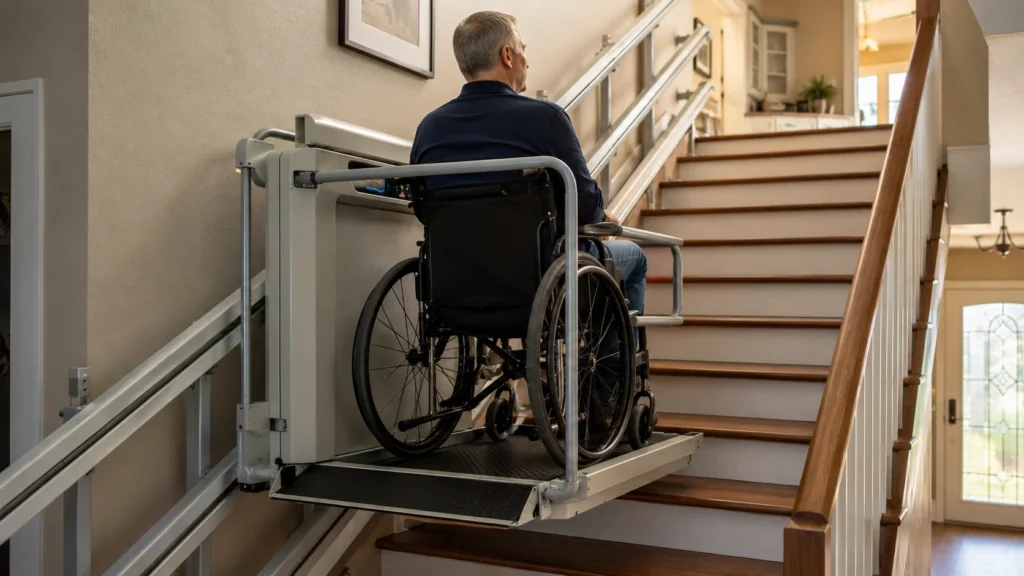
The main difference between a platform stair lift vs stairlift is how the person travels up and down the stairs. A platform lift carries the wheelchair itself, while a regular stairlift uses a seat and usually requires the user to transfer from their wheelchair. That makes a platform system a practical choice for people who cannot safely or comfortably make that transfer.
| Feature | Platform Stair Lift | Regular Stairlift |
| User rides on | Wheelchair platform | Stairlift seat |
| Wheelchair transfer | Usually not required | Usually required |
| Best suited for | Wheelchair users | Users who can transfer |
| Mobility device travels with user | Yes | Usually no |
| Staircase space | More clearance may be needed | Usually less |
| Platform/seat | Platform | Seat |
A wheelchair stair lift can also be useful when keeping the mobility device with the user is a priority. A regular stairlift may make more sense for someone who can transfer safely and wants a smaller system. Staircase width and available clearance matter, too, since a platform takes up more room while traveling.
How Much Does a Platform Stair Lift Cost?
For a platform stair lift cost estimate in the U.S., expect pricing to vary widely based on the staircase, equipment, and installation work. Current industry pricing puts professionally installed wheelchair platform lifts broadly around 12,000–35,000, while an inclined platform lift over a straight staircase may fall around 20,000–30,000 as a general guideline.
The wheelchair platform lift cost can rise with a longer track, curved stairs, a larger platform, higher weight capacity, outdoor-rated equipment, electrical work, or structural changes. Installation, permits, inspections, and added safety options may also affect the final quote.
| Cost Factor | Potential Effect on Price |
| Straight staircase | Usually simpler installation |
| Curved staircase | May require a custom rail |
| Longer staircase | More track/material |
| Larger platform | May increase equipment cost |
| Higher weight capacity | May increase equipment cost |
| Outdoor installation | Weather-resistant equipment may be required |
| Electrical work | Additional project cost |
| Structural modifications | Can increase installation cost |
For a residential platform lift cost, getting the staircase and landing areas assessed before buying is a smart move. A site evaluation can account for measurements, travel distance, clearance, and installation requirements instead of relying on an online price alone.
Straight vs. Curved Platform Stair Lifts
Straight Staircases
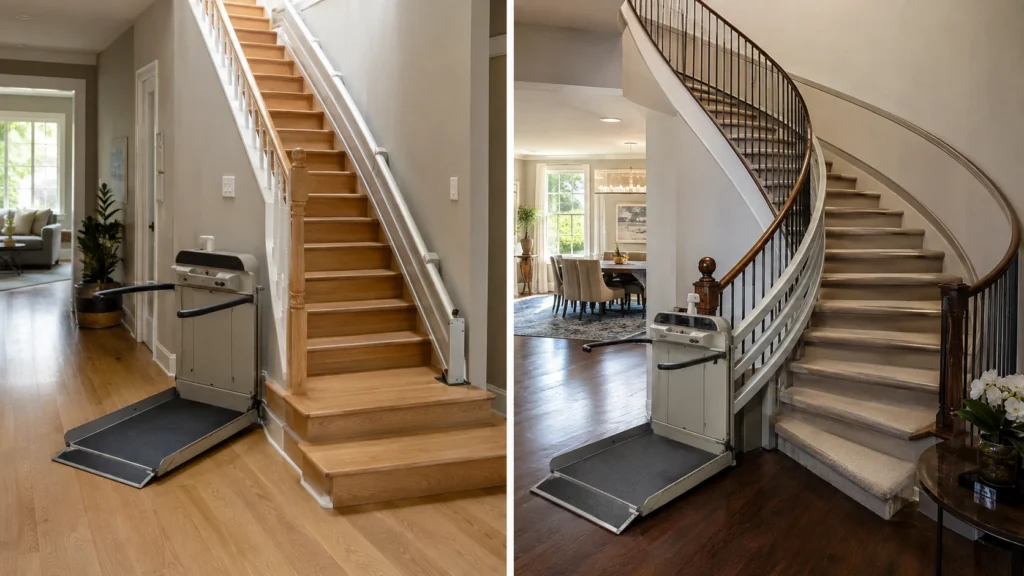
A platform stair lift for straight stairs follows a single, uninterrupted flight from one level to another. This simpler layout can make installation more straightforward and is a common choice for residential homes. The available stair width and landing space still need to be checked before installation.
Curved Staircases
A platform stair lift for curved stairs is designed for stairs with turns, bends, or intermediate landings. These systems may need a custom rail built around the shape of the staircase, which can increase both planning time and cost. A professional site assessment is especially useful for a curved wheelchair platform lift because the track needs to follow the exact stair layout. So, can a platform stair lift work on curved stairs? Yes, but the equipment must be suited to the staircase design and available clearance.
Will a Platform Stair Lift Fit Your Home?
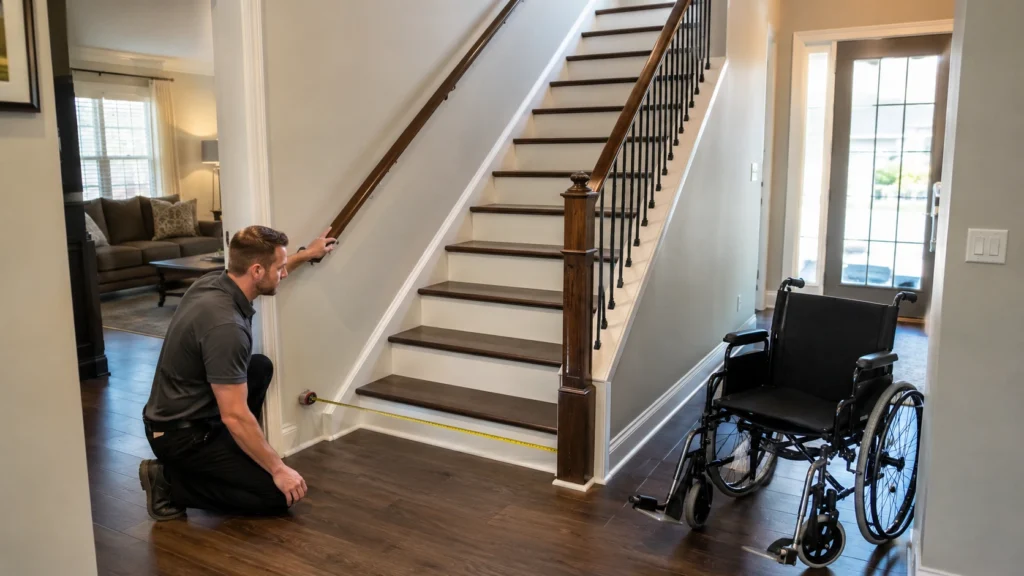
Before ordering a platform stair lift, your staircase and wheelchair both need to be checked against the lift’s specifications. Stair width is one of the first measurements to consider, but there is no single minimum width that works for every model. The platform itself, rail position, and available staircase clearance all affect the fit.
A proper home assessment should check:
- Stair width and angle
- Total staircase length
- Top, bottom, and intermediate landings
- Wheelchair width, length, and weight
- Platform dimensions and platform width
- Folding clearance
- Nearby doors and other obstacles
- Available electrical supply
The weight capacity of the lift should match the wheelchair and user together, with the required safety margin specified by the manufacturer. Landing clearance matters as well, especially where doors or narrow hallways are close to the stairs. For this reason, a professional home accessibility assessment is useful before ordering. It can confirm the actual staircase measurements and whether the selected lift can be installed safely.
Safety Features to Look For
Good platform stair lift safety starts with keeping the wheelchair stable and stopping the lift when something is wrong. Features vary by model, so check the specifications before choosing a system. Useful features can include safety restraints, barriers, safety sensors, obstruction detection, and an emergency stop control. A non-slip platform can provide a more secure surface, while a wheelchair restraint system helps keep the mobility device in position during travel. Battery backup can be helpful during a power outage, and some systems offer emergency or manual operation. A folding platform can also reduce the space taken up by the lift when it is parked. So, are platform stair lifts safe? They can be, when properly selected, installed, and used according to the manufacturer’s instructions. For wheelchair lift safety, also check the lift’s weight rating and safety requirements before installation.
Which Home Accessibility Lift Is Right for You?
The best home accessibility lift depends on how you use your home, your mobility needs, and the space available. An inclined platform lift follows the staircase, making it suitable for wheelchair users who need to travel between floors while staying in their wheelchair. A vertical platform lift (VPL) works differently—it moves straight up and down and can be useful for access to a porch, deck, or raised entrance. A regular stairlift may suit someone who can safely transfer to a seat, while a wheelchair ramp can work well where there is enough outdoor space and a manageable rise.
| Your Situation | Possible Solution |
| You need to remain in your wheelchair on the stairs | Platform stair lift |
| You can safely transfer to a seat | Regular stairlift |
| You need vertical access from a porch or deck | Vertical platform lift |
| Your staircase has curves or landings | Custom inclined platform lift |
| Your staircase has limited clearance | Professional assessment first |
A residential wheelchair lift should be selected after checking the actual layout, available clearance, and equipment requirements.
Pros and Cons of a Platform Stair Lift
A platform stair lift can be a practical option for wheelchair users, but it is not suitable for every staircase or home. Looking at both the advantages and drawbacks before getting a quote can make the decision easier.
Pros
- Allows many wheelchair users to remain in their wheelchair
- Useful for homes with multiple levels
- Can improve access between floors
- Straight and curved configurations are available
- Reduces the need for wheelchair-to-seat transfers
Cons
- Needs enough staircase clearance
- May cost more than some traditional stairlifts
- Installation depends on the home’s layout
- A larger platform can reduce usable stair space
- A professional assessment may be needed before installation
What to Ask Before You Buy
Before requesting a platform lift quote, ask a few practical questions about the equipment and installation. Will your wheelchair fit the platform, and does the weight capacity cover both the user and chair? Ask for the total installed cost, including any electrical or structural work. Find out what happens during a power outage and whether battery backup is included. Also ask what maintenance is required, what the warranty covers, and whether there are local installation or building requirements. A professional installation and site assessment can help confirm that the selected system fits your staircase and that the wheelchair lift installation is suitable for your home.
FAQs About Platform Stair Lifts for Home
Can a wheelchair stay on a platform stair lift?
Yes. A platform stair lift is designed to carry a wheelchair along the stairs, so the user can generally remain in the chair during travel. The platform size, weight rating, restraints, and other safety requirements vary by model.
How much does a platform stair lift for home cost?
In the U.S., costs can vary widely. Equipment type, staircase length, straight or curved design, platform size, installation work, and site conditions can all affect the final price. A professional quote gives a more accurate figure for your home.
Can platform stair lifts work on curved stairs?
Yes, some systems can be installed on curved staircases. Curves, turns, and intermediate landings may require a custom rail, so the installation can be more involved than a straight-stair setup.
What is the difference between a platform stair lift and a vertical platform lift?
A platform stair lift travels along the slope of the staircase. A vertical platform lift, or VPL, moves straight up and down between levels, such as a porch and raised entry.
How much space does a platform stair lift need?
There is no single space requirement for every model. Stair width, platform dimensions, rail placement, folding clearance, and landing space all matter. Check the manufacturer’s specifications and have the staircase measured before purchase.
Final Takeaway
A platform stair lift for home can be a practical choice when wheelchair access between floors is difficult. It can let the user remain in their wheelchair instead of transferring to a stairlift seat. The best setup depends on the staircase layout, wheelchair dimensions, available clearance, safety features, and budget. Before purchasing, have the stairs and landing areas assessed by a qualified professional. A proper assessment can confirm whether the selected lift fits your home and meets the equipment’s installation requirements.